Advancements in Vitreoretinal Surgery for Canine Glaucoma
A recent study highlights the evolution of surgical procedures for canine glaucoma, a common and aggressive disease process in dogs. The study focuses on the efficacy of pars plana endocyclophotoablation (ECP) in achieving long-term intraocular pressure (IOP) control and vision preservation in dogs.
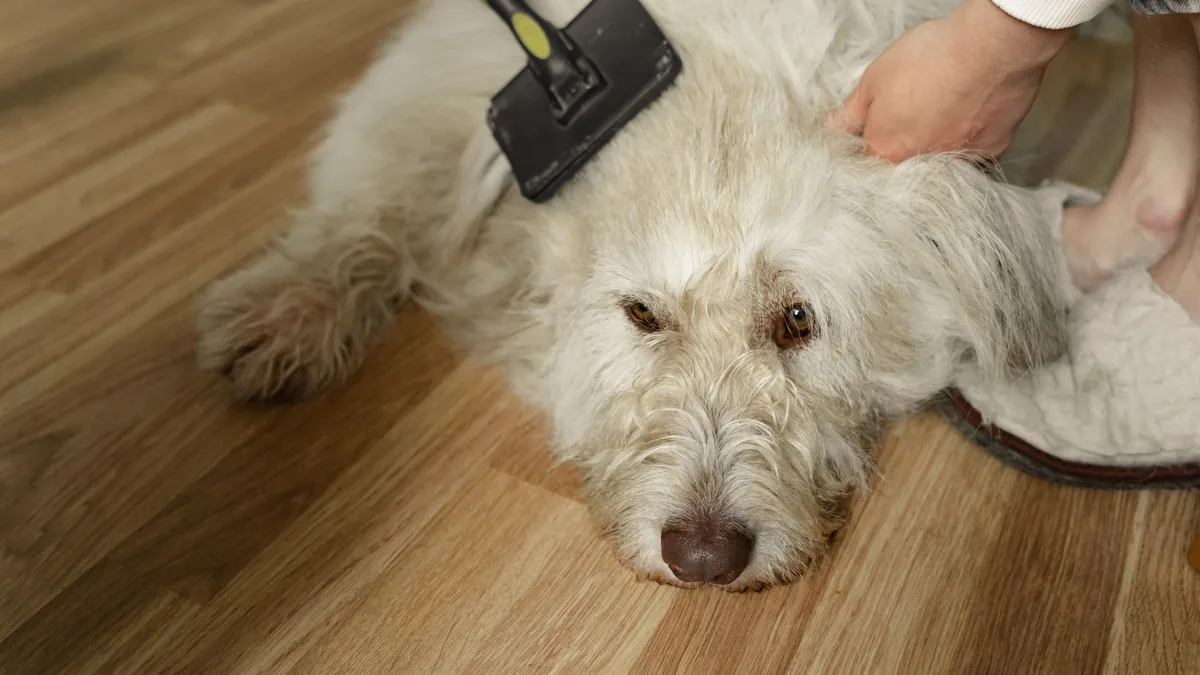
Canine glaucoma is a serious condition that affects many breeds, including the cocker spaniel, Boston terrier, and Labrador. Medical therapy may initially control the disease, but it can ultimately fail, leading to blindness. Surgical interventions have evolved significantly over the years, offering new hope for dogs suffering from glaucoma.
Surgical Approaches for Canine Glaucoma
There are two primary surgical approaches for gaining access to the ciliary processes: the anterior approach and the pars plana approach. The anterior approach involves making a corneal limbal incision, which can be challenging due to the variable IOP in the eye. This approach has limitations, including the need for viscoelastic substances to maintain the eye shape and the risk of postoperative inflammation.
| Approach | Limitations |
|---|---|
| Anterior | Variable IOP, postoperative inflammation, need for viscoelastic substances |
| Pars plana | Enhanced visualization, reduced postoperative inflammation, no need for viscoelastic substances |
In contrast, the pars plana approach involves inserting a laser endoscope through a fixed scleral port into the pars plana, enabling direct visualization of the ciliary processes. This approach offers several advantages, including enhanced visualization, reduced postoperative inflammation, and the ability to treat 360 degrees of the ciliary body.
Pars Plana Endocyclophotoablation (ECP)
Pars plana ECP is a cyclodestructive procedure that photocoagulates the ciliary body processes to reduce aqueous humor production and subsequently decrease the IOP. The procedure involves inserting a 23-gauge straight endoscope and alternately treating the ciliary processes with a 90-150 mW argon laser until shrinkage and whitening occur.
| Power Setting | Duration (ms) |
|---|---|
| 90 mW | 100-150 ms |
| 120 mW | 150-200 ms |
| 150 mW | 200-250 ms |
The procedure also involves the use of an ophthalmic endoscopy system with an external argon laser, which allows for 360-degree cyclophotocoagulation of the ciliary processes. The power setting and duration of the laser treatment can be adjusted to achieve optimal results.
Results and Complications
Studies have shown that pars plana ECP can achieve significant IOP reduction and vision preservation in dogs. A study in humans observed an IOP decrease of 61-66 percent with a pars plana approach after being refractory to other glaucoma surgical interventions, compared to those who had an anterior ECP with an IOP decrease of approximately 31 percent. Complications of ECP by the anterior approach include intraocular inflammation with or without fibrin, cataract formation from lens touch, uncontrolled IOP, corneal ulceration, corneal edema, and phthisis bulbi.
A larger-scale study of 50 dogs will be presented at the annual ACVO Conference in October 2026, providing further insight into the efficacy and safety of pars plana ECP in canine glaucoma.
A study in humans observed an IOP decrease of 61-66 percent with a pars plana approach after being refractory to other glaucoma surgical interventions, compared to those who had an anterior ECP with an IOP decrease of approximately 31 percent.
Source: Veterinary Practice News