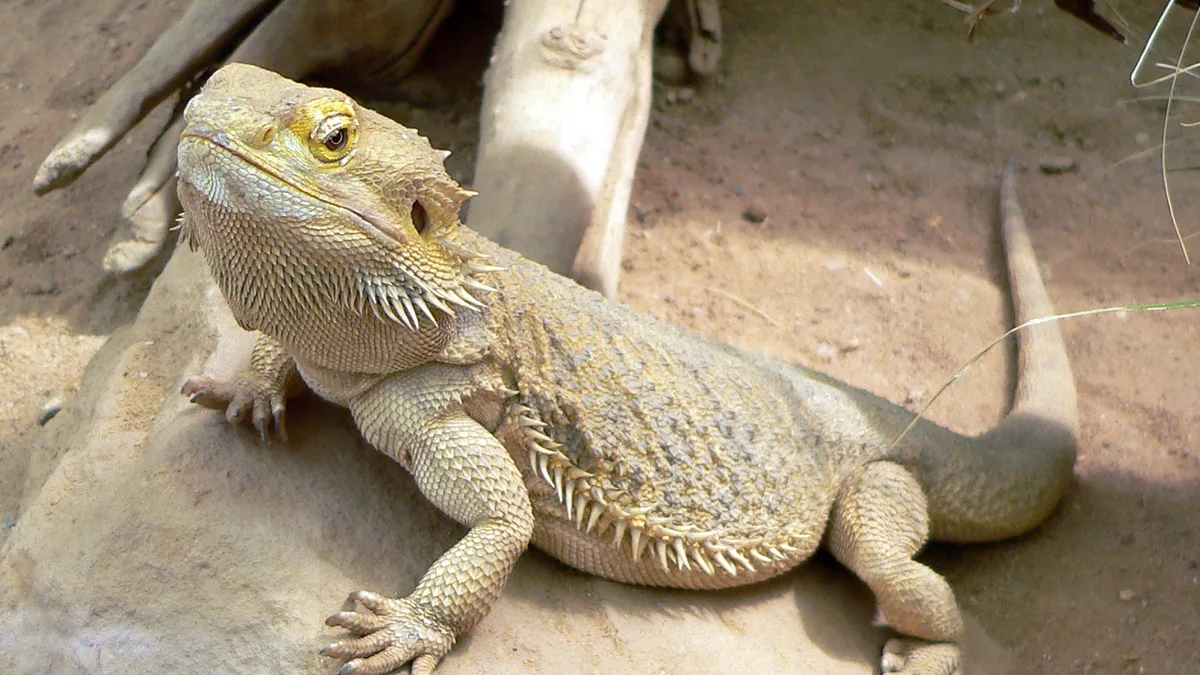
Bearded Dragons
| Country of origin | Australia |
|---|---|
| First created | Documented in the early 19th century |
| Original use | Wild species, not selectively bred |
| Adult size | Medium lizard, 40 to 60 cm total length |
| Housing type | Terrestrial, requiring a long enclosure |
| Diet | Omnivorous (insects and vegetation) |
| Temperature gradient | Required, with a basking zone |
| Handling temperament | Generally docile and tolerant |
Origin and history
The Bearded Dragon is native to the arid, rocky woodlands and deserts of central Australia. These reptiles are not a created breed but a wild species, with several subspecies identified across different regions of the continent. They were first documented by Western science in the early 19th century, with formal descriptions occurring in the 1820s. Their establishment in the global pet trade began much later, primarily in the 1990s, following changes in Australian wildlife export laws. The species commonly kept in captivity is the Central Bearded Dragon (*Pogona vitticeps*), which became the most popular due to its adaptable nature. The history of their captive breeding is a key reason for their availability, as virtually all pet specimens are now captive-bred, reducing pressure on wild populations.
What it was bred for
Bearded Dragons were not originally bred for a human-defined purpose, as they are a wild species. However, extensive captive breeding over recent decades has selectively emphasized traits desirable for life in captivity. Breeders have selectively favored individuals with docile temperaments and reduced stress responses to human handling. Color morphs and patterns, such as citrus, hypo, and translucent, have been developed through selective breeding for aesthetic appeal. Some breeding also focuses on scaling patterns, like silkbacks, which require specific care due to lacking typical scales. The overarching goal of modern breeding programs is to produce hardy, personable, and visually distinctive lizards that thrive in a domestic setting.
Life cycle
A Bearded Dragon's life cycle begins as an egg, with a typical clutch size ranging from 15 to 30 eggs laid in a burrow. Incubation lasts approximately 50 to 80 days, with temperature influencing the sex of the hatchlings in a process known as temperature-dependent sex determination. They reach sexual maturity between 8 and 18 months of age, at which point their growth rate slows significantly. With proper care, including correct heating, lighting, and diet, a captive Bearded Dragon's lifespan is commonly 8 to 12 years.
Character and appearance
Bearded Dragons are medium-sized, stout lizards with a broad, triangular head and rows of spiny scales along their flanks. Their most distinctive feature is the "beard," a pouch of skin under the jaw that can expand and turn black when threatened or displaying. They typically exhibit a range of earthy colors in the wild, including tans, browns, and reds, though captive morphs display vibrant oranges, yellows, and whites. Their character is generally docile and curious, with many individuals tolerating and even seeming to enjoy regular handling once acclimated. They are diurnal, basking for many hours each day, and exhibit a range of recognizable behaviors like arm-waving and head-bobbing for communication. Their appearance includes a robust body supported by four strong legs and a tail that is usually not shed or dropped readily like some other lizards.
Pros and cons
A significant pro is their generally placid and interactive demeanor, making them one of the most handleable pet lizard species. They are also relatively hardy when their specific environmental needs are met consistently, which contributes to a good lifespan. The cons are substantial and often underestimated, primarily the absolute requirement for expensive, specialized equipment, including a large enclosure, a high-output UVB light that must be replaced every six months, and precise basking heat sources. Common mistakes include housing them in tanks that are too small, using inadequate or incorrect UVB lighting, and providing a poor diet leading to metabolic bone disease, a frequent and fatal ailment. Many owners regret the choice due to the significant ongoing cost of electricity to run multiple lamps 12-14 hours a day and the constant need for live insect feeders, which can be messy and require separate cultivation. This species does not suit someone seeking a low-maintenance or inexpensive pet, as initial setup costs are high and daily care is mandatory.
Who it suits
This species suits a dedicated beginner or intermediate reptile keeper who has thoroughly researched their needs and is prepared for the financial and time commitment. It is ideal for someone who wants a diurnal, observable pet that can be interacted with regularly, unlike many nocturnal or more reclusive reptiles. They suit households with space for a large, permanent enclosure that will be a focal point of a room, as a full-sized adult requires a minimum of a 120-gallon tank. A prospective owner must be comfortable with sourcing and handling live insects like crickets, roaches, and worms, as well as preparing fresh salads daily. They are not suitable for young children as primary caretakers due to the precision required in habitat management and the fragility of the animal if dropped. Ultimately, they suit a patient, detail-oriented person who derives enjoyment from creating and maintaining a complex miniature ecosystem.