Ketamine for End-of-Life Pet Pain Management
Veterinary research supports subanesthetic ketamine as a tool for managing complex, chronic pain in pets receiving palliative or hospice care, offering a

Subanesthetic ketamine is emerging as a key tool for managing complex pain in pets receiving veterinary hospice and palliative care. According to a report in Veterinary Practice News, this approach can interrupt the pain cycle itself, not just provide temporary relief, helping clinicians re-establish comfort and recalibrate daily pain management strategies. This is particularly relevant for patients whose conditions are tracked in our stats database, where pain management outcomes are a key metric.
Chronic pain in end-stage diseases like cancer or degenerative joint disease changes the nervous system. Continuous pain signals trigger central sensitization, a process where the spinal cord and brain become hyperexcitable. This leads to hyperalgesia and allodynia, where pain responses are exaggerated or triggered by normally non-painful stimuli. Standard pain medications often cannot correct this underlying dysregulation.
The NMDA Receptor Connection
Ketamine's value lies in its action on N-methyl-D-aspartate (NMDA) receptors in the nervous system. As outlined in a review by Pozzi, Muir, and Traverso in the Journal of the American Veterinary Medical Association, NMDA receptor activation drives central sensitization. Ketamine blocks these receptors at low doses. This can reduce neuronal hyperexcitability, decrease hyperalgesia and allodynia, improve the effectiveness of other pain medications like opioids, and lower overall pain perception beyond the drug's immediate presence in the body. This creates a potential "neuroplastic window" for resetting pain pathways.
What the Research Shows
Evidence for ketamine's use in veterinary patients has grown over two decades. A clinical trial by Wagner et al. with 27 dogs undergoing forelimb amputation found dogs receiving a low-dose ketamine infusion had significantly lower pain scores at 12 and 18 hours post-surgery and were more active by day three. Slingsby and Waterman-Pearson found perioperative ketamine reduced the need for rescue analgesia in dogs undergoing ovariohysterectomy.
Research in cats has shown more nuanced results. A study by Ambros et al. found low-dose ketamine infusions had only modest effects on nociceptive thresholds in conscious cats under experimental conditions.
A 2025 retrospective case series from Cornell University evaluated outpatient ketamine-lidocaine (KL) infusions in 114 animals (105 dogs and 9 cats) with cancer-related refractory pain. Following a single 4 to 6-hour infusion, 76 percent showed improvement in at least one clinical sign, with the greatest gains in activity level, lameness, and owner-perceived pain. Response was more likely at ketamine infusion rates of 2 µg/kg/min or higher and total doses of 0.5 mg/kg or more. The infusions were well tolerated.
A preliminary study by Fry, Rychel, Tearney, and Guedes with 10 senior dogs suffering from refractory chronic pain found that intravenous ketamine administered on days 1, 15, and 29 led to significantly lower veterinary pain scores and owner-reported pain scores that were sustained through day 57.
Routes of Administration
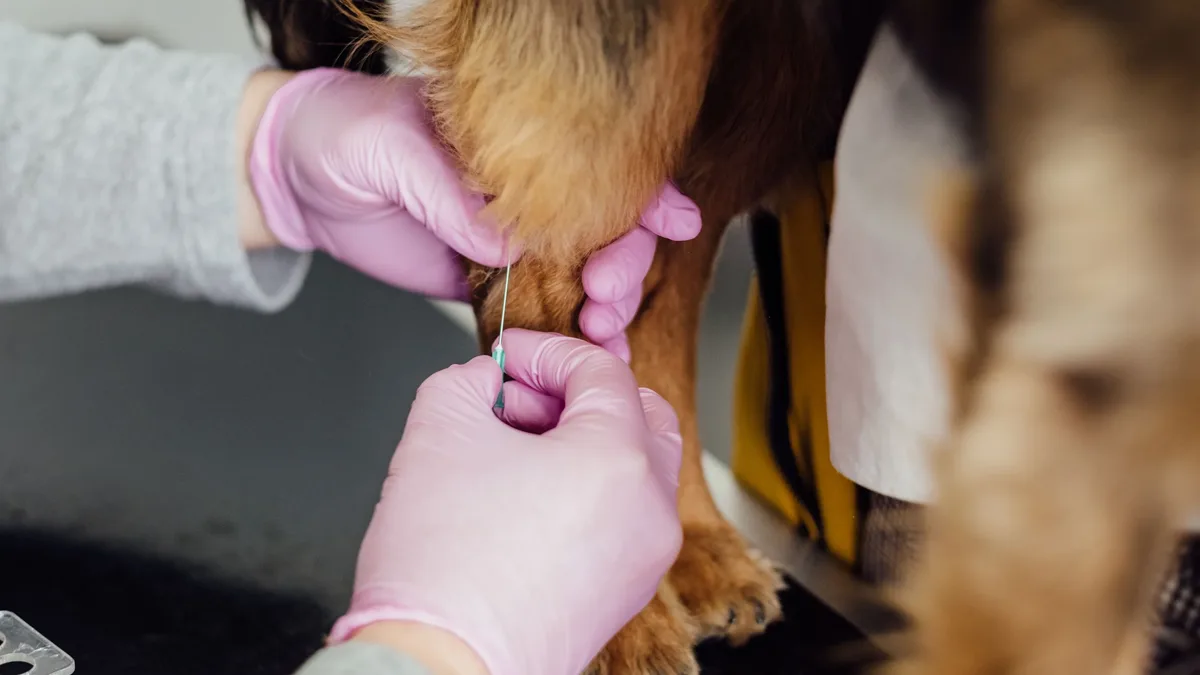
Ketamine's flexibility is a practical advantage in palliative care. The route can be matched to the patient's condition and care setting, which is crucial for managing cases that may also involve injuries or complex medical histories.
Subcutaneous delivery via wearable pump systems, as studied by Colón et al., supports steady drug levels and reduces stress for fragile patients at home.
Ketamine offers a distinct mechanism for managing the complex pain seen in veterinary palliative cases. Its ability to potentially reset maladaptive pain pathways provides a valuable option when standard therapies are no longer sufficient, offering hope for improved quality of life as documented in patient care fixtures.