Veterinary Practices Adjust Care 5 Times Weekly Over Cost
A 2026 report finds veterinary teams adjust treatment plans 5.1 times per week due to client cost concerns, with 13% of euthanasia decisions linked to an
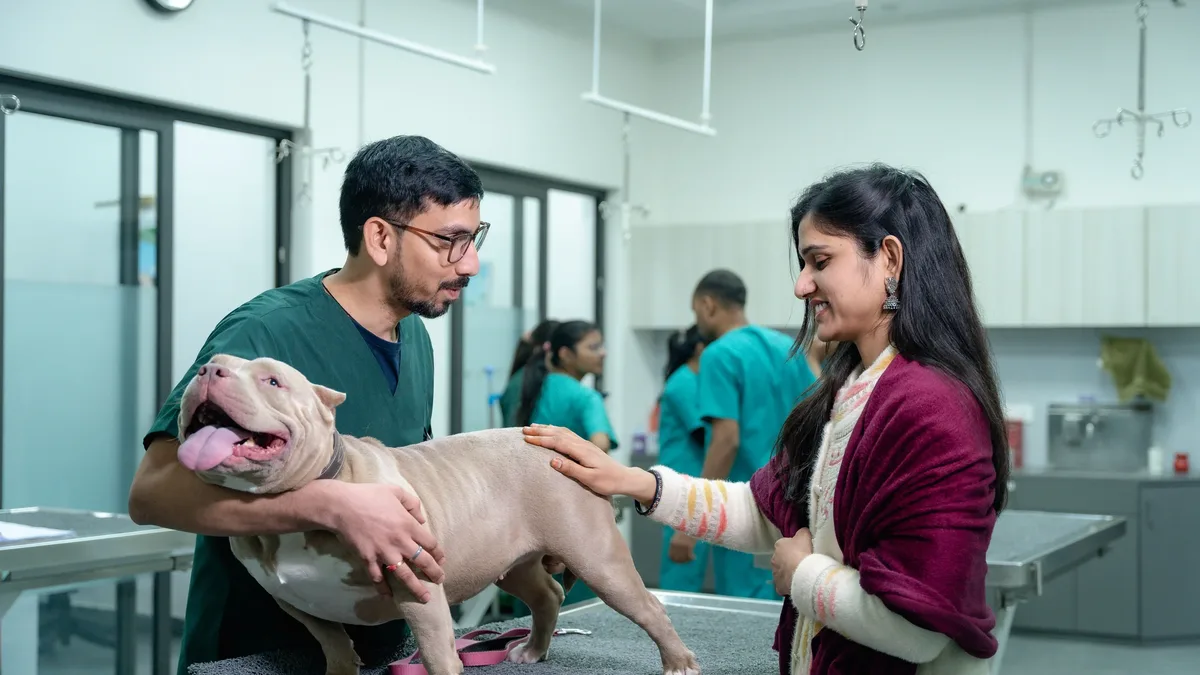
Veterinary teams adjusted their recommended treatment plans an average of 5.1 times per week in 2026 because of client cost concerns. This figure is up from 4.7 times per week in 2025, according to a new industry report. The findings come from the third edition of the State of the Industry report, released by Pawlicy Advisor and the American Animal Hospital Association (AAHA).
The report surveyed 451 veterinary professionals in May and June 2026. This brings cumulative participation across the 2023, 2025, and 2026 editions to over 1500 respondents. The survey sample consisted of veterinarians and medical directors (40.6%), practice managers and administrators (39.5%), veterinary technicians (10.2%), client service representatives (3.2%), and non-veterinarian owners and other roles (6.5%). Independent hospitals provided 67.6% of responses, while corporate practices accounted for 29.1%.
The Financial Wall for Pet Owners
Weekly cost-driven adjustments to care were reported by 86.1% of respondents, a slight increase from 84.4% in 2025. The volume of difficult financial conversations with clients also rose, from an average of 4 per week to 4.4. A new question in the 2026 survey pinpointed where clients typically decline care. The results were sobering. 85% of respondents said clients begin declining recommended care at estimates of $1000 or less. Nearly half, 47.3%, placed that threshold at $500 or less.
At the most severe end of the spectrum, the report highlights euthanasia decisions. Respondents estimated that 13% of euthanasia decisions in their practices were driven by an owner's inability to pay. This figure was unchanged from 2025. Nearly one in four respondents placed this figure at 20% or higher.
The Impact of Pet Insurance
The report found clear positive differences for insured pets. 85.6% of veterinary professionals observed better outcomes for insured versus uninsured patients. The most commonly noted benefit was better treatment compliance, cited by 73.0% of respondents. This was followed by better patient outcomes (49.9%) and less economic euthanasia (35.2%). Agreement that insurance helps clients say yes to more care has remained near 87% across all three editions of the report.
The data also showed a link between insurance penetration and practice workflow. There was a modest but statistically significant inverse relationship between a practice's share of insured patients and how often its team adjusted care for cost. This means practices with more insured clients reported making fewer cost-driven adjustments. This is the second consecutive year this link has been identified.
Barriers to Proactive Recommendations
Despite the benefits, insurance adoption is often reactive. Only 48.2% of respondents said their practice recommends insurance proactively. The majority wait for clients to ask. This hesitation has a measurable impact. Practices that recommend proactively reported a median insured patient share of 7.5%. Those that wait reported a share of just 3.5%.
The primary barriers are logistical, not philosophical. Difficulty having the conversation was reported by 69.6% of respondents. The leading obstacle was simply a lack of time, cited by 27.7%. Legal concerns also play a major role. Recommending a single insurance carrier made 79.3% of respondents uncomfortable. This instinct is well-founded, as only 1.4% hold the property and casualty license required to legally solicit coverage.
When offered alternatives, most favored a licensed, independent resource. 60.5% pointed to a comparison marketplace staffed by licensed experts as the preferred method for discussing insurance. Only 6.8% favored providing a brochure from a single provider. The report was produced by Pawlicy Advisor, a licensed pet insurance marketplace and brokerage recommended by AAHA, in partnership with AAHA.